
Macronutrients – are carbohydrate, fats and protein and our body requires these in larger quantities than micronutrients (later post!).
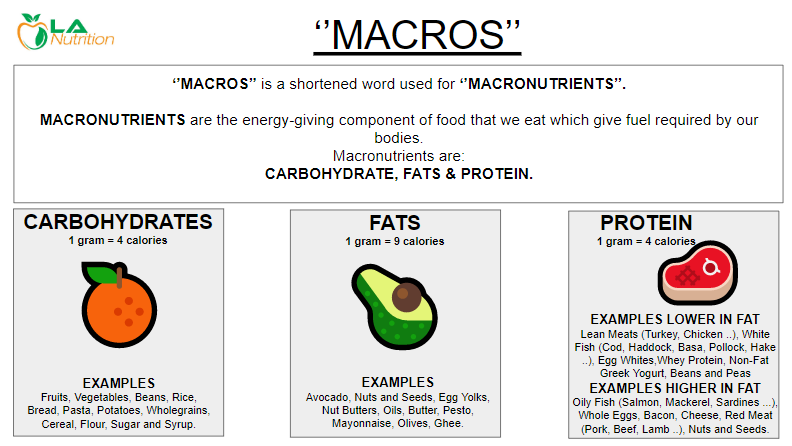
🥩 Protein provide amino acids, some of which we cannot make in our body. It is needed for growth, repair and maintenance of our body and health.
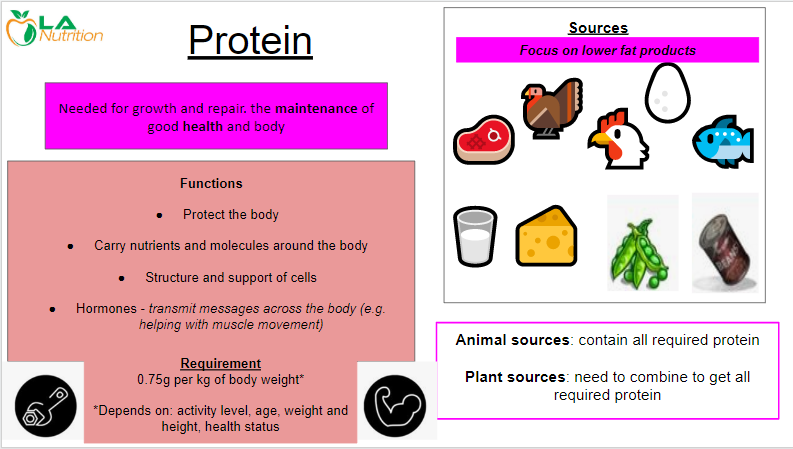
Sources of protein include:
- Chicken, turkey*
- White fish (cod, haddock, hake etc.)*
- Oily fish (salmon, tuna, herring, mackerel)**
- Eggs
- Beans, Pulses, Peas and Lentils*
*Lower in fat – Try to choose rather than red, fatty meats ( e.g. bacon, sausages, pastrami … which are high in saturated fat and can raise cholesterol)
**Should have 2 servings of fish a week, with at least 1 oily fish per week! Oily fish contains essential fatty acids which our body cannot make which means we must consume them in our diet!
Protein Recommendations: 0.75kg x kg of body weight but is dependent on your activity levels, age, weight and height & your current health status.
If you are vegetarian or vegan and eating only plant sources .. combine two different protein sources together to get a ‘’complete protein’’. (E.g. houmous and bread, rice & beans). Exceptions of this are when eating: quinoa, buckwheat, hempseed, chia seed and soy products.
🍐Carbohydrates … often get a bad rep … but they are the body’s preferred energy source!
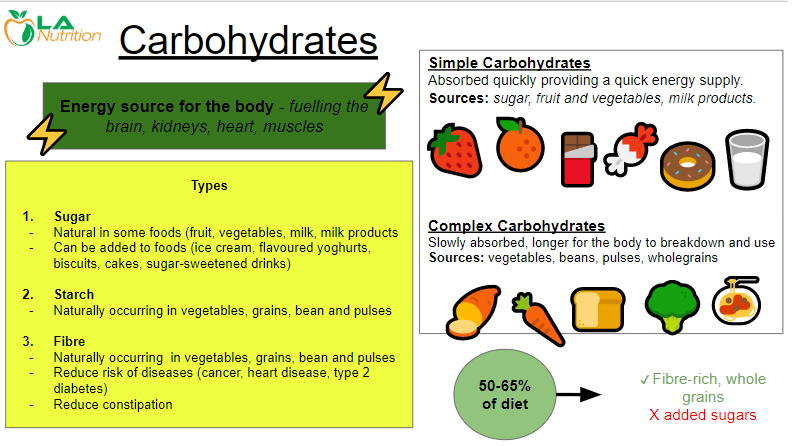
Overview of carbohydrates; roles, sources & requirement
The body needs energy to keep warm, to grow, repair and even still requires energy when you’re asleep as your heart, lungs and organs all continue to work. Carbohydrates should make up 50-65% of your diet. They should come from complex carbohydrates (fibre-rich, whole grain products with the appropriate amount of starchy carbs) because Whole Grain carbohydrates contain a higher amount of fibre, vitamins and minerals than white refined carbohydrates, which are stripped of their fibre, vitamins and minerals during production.
Starchy products: potatoes, rice, noodles, pasta, bread, oats, cous cous, bagels etc.
Fibrous foods: Wholegrain breakfast cereals, wholewheat pasta, wholegrain bread and oats, pears, oranges, brocolli, carrots, sweetcorn, peas, beans and pulses, potatoes with skin!
Naturally occurring sugar from fruits, vegetables, milk and milk products are fine, .. but watch out for the added sugar in foods – those found in processed foods (ice cream, biscuits, cakes & sugar sweetened drinks) as they have a high amount of calories and offer very little or no essential nutrients!
🥑Your body definitely needs … FAT!
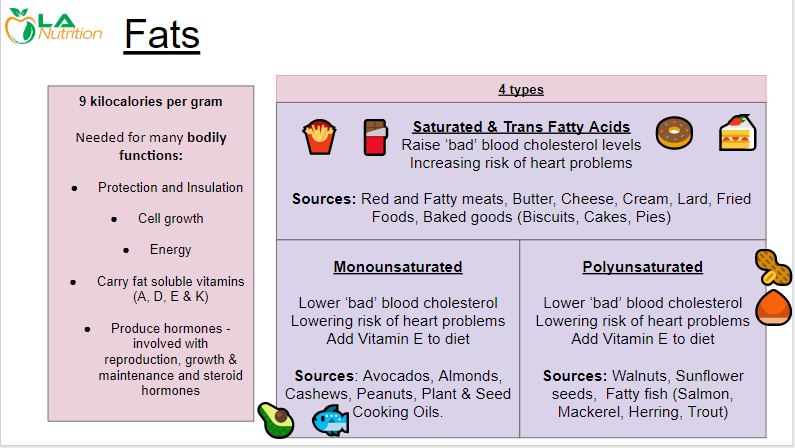
Overview of fats: role, types and sources
Dietary fats give your body energy, protect organs, help to keep your body insulated and warm, and support cell growth. They also are required to absorb fat-soluble vitamins (A, D, E and K – all required for different functions) and produce important hormones, which are involved in reproduction, growth & maintenance and steroid hormones.
All fats contain 9 kilocalories per gram
!!! This is more than double the amount of kilocalories than protein and carbohydrate (4 kilocalories per gram) !!!
So for the same size serving of fat (10g) as 10g of protein or carbohydrate, you will get more calories!!! (Beware if dieting & watching calories).
4 types of dietary fats – Saturated, Trans, Polyunsaturated and Monounsaturated.
Saturated and Trans Fatty Acids – are the ‘’bad’’ fats, as they raise cholesterol levels, increasing your risk of heart disease and stroke. Monounsaturated and Polyunsaturated – ‘’good’’ fats – which lower ‘’bad’’ cholesterol in the blood, and lower your risk of heart disease and stroke.
Men should have no more than 30g of saturated fat per day (aged 19-64), and women no more than 20g of saturated per day (aged 19-64). Try to opt for unsaturated sources of fat where possible.