
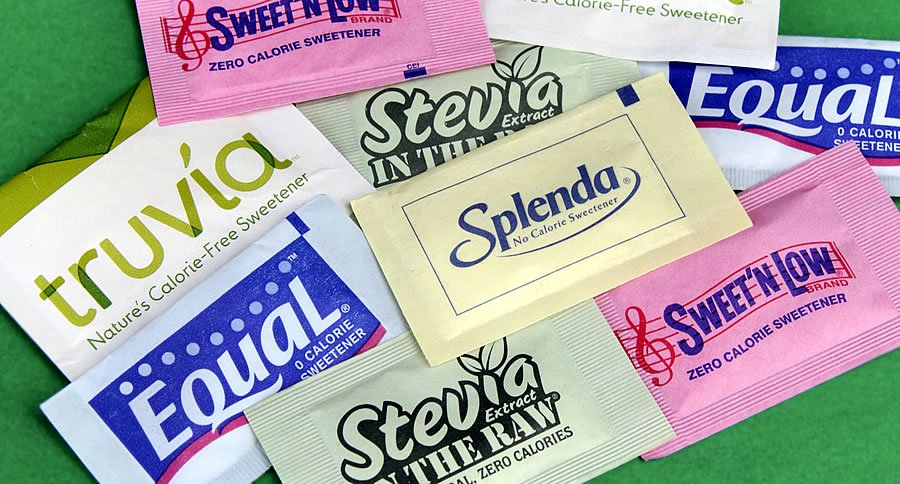
What are artificial sweeteners?
Artificial sweeteners act as a sugar substitute – providing a sweet-like taste to food products but containing significantly less energy (calories) than sugar.
Where can I find them?
Artificial sweeteners can be added to drinks, desserts, yogurts, cakes, ready meals, chewing gum, and toothpaste.
What are the benefits of artificial sweeteners?
Artificial sweeteners have been incorporated into food products for people who are wanting to cut down on sugar. They can be helpful when losing weight, and can help with avoiding tooth decay and cavities.
Are artificial sweeteners safe?
The European Food Safety Authority (EFSA) has approved the following sweeteners safe for use in the UK: acesulfame K, aspartame, saccharine, sorbitol, sucralose, stevia and xylitol. These names will be listed on the ingredient lists of many products as they are authorised substances which can be added to foods.
However, some people avoid consuming them due to the continued debate over the effects they have on the body. Some individuals report migraines and headaches when they consume artificial sweeteners (this could be due to a personal trigger).
Research has also indicated that consumption can affect gut microbial activity. A disruption within the gut microbial has been linked to gastrointestinal conditions (i.e. inflammatory bowel disease), and can affect immune responses and increase our risk of metabolic problems.
Safe Intake
As part of approving them as safe – the EFSA carry out risk assessments and set an Acceptable Daily Intake (ADI). ADI – estimated amount per kilogram of body weight that a person can consume, on average, everyday over a lifetime without risk.
Acesulfame-K – 9mg/kg body weight
Aspartame – 40mg/kg body weight
Saccharin – 5mg/kg body weight
Sucralose – 15mg/kg body weight
For example, a 150-pound person (68kg), 2,720mg of aspartame would be acceptable (highest amount deemed safe to consume). This level set makes it unlikely a diet of an individual will provide this level.
Conclusion
Artificial sweeteners aren’t bad they’re handy alternatives to lessen our sugar intake, and reduce our risk of tooth problems. Use artificial sweeteners moderately, definitely reach for the diet coke instead of full-fat coke to reduce sugar & calorie intake and reduce your risk of tooth decay and cavities.