
Overview
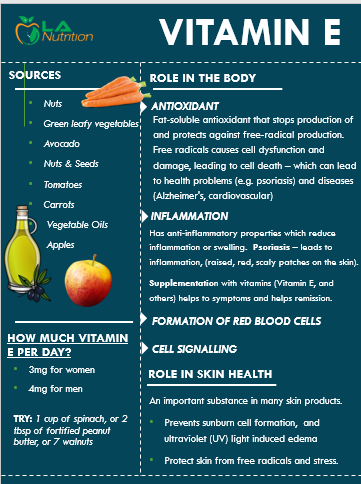
Vitamin E requires fat to be absorbed, and once absorbed acts an antioxidant in the body.
Food Sources
Vitamin E can be found in a number of foods including:
- Nuts
- Green leafy vegetables
- Avocado
- Seeds
- Tomatoes
- Apples
- Carrots
- Whole grains
- Vegetable Oils – sunflower, olive
Functions in the body
Vitamin E has many functions in the body including:
- Acting as an antioxidant – protects cells from damage
- Helps regulate the immune response
- Helps the body use vitamin K
- Helps cells interact and carry out important functions
- Helps with the formation of red blood cells
Vitamin E and Skin Health
Vitamin E is known for its benefits on skin health, and is an important ingredient in many skin products.

Several studies have shown success of Vitamin E on the treatment of psoriasis.
Kim Kardashian West has shared her journey with the autoimmune condition of psoriasis.


Psoriasis is triggered by genetics or exposure to certain environment conditions – which leads to inflammation (raised, red, scaly patches on the skin).
29 hospitalized patients with psoriasis were supplemented with vitamin E, coenzyme Q10 and selenium – and had their signs and symptoms of psoriasis monitored. Supplementation with the antioxidants resulted in significant improvements of the signs and symptoms of psoriasis (raised, red, scaly patches on the skin).
A 36 year old female with psoriasis had all processed foods and sugars eliminated, and was supplemented with vitamin E and a number of additional vitamins, minerals and amino acid – which reduced the signs and symptoms of psoriasis without the need for standard treatment (e.g. corticosteroids).
Both of these studies support the role for vitamin supplementation in psoriasis, but the addition of other substances can be beneficial.
Vitamin E and Olive Oil
We can get vitamin E within the diet through olive oil, in the form of alpha tocopherol. Extra virgin olive oil is thought to increase heme oxygenase 1 (HO-1) – a protein involved in the prevention of inflammation.
Inflammation and Immune Response
Inflammation is the body’s response to an illness, injury or infection. It can be a process by which the body protects us from the infection/injury/illness. However, in some cases (E.g. psoriasis, eczema) the body triggers an attack on our own skin cells, and triggers an inflammatory response.
How much Vitamin E do I need?
There is no specific recommendation for vitamin E in the UK, but the NHS advises:
- 3mg a day for women
- 4mg a day for men
You can get the recommended amounts of vitamin E by eating a variety of foods including:
- 1 oz of walnuts (about 14 halfs) = 7mg
- 2 tbsp of peanut butter, fortified (15g) = 4 mg
- 1 cup of spinach = 4mg
- 1 cup of broccoli = 2mg
- 1 tbsp of sunflower oil (15g) = 6mg
Can Vitamin E be harmful?
If supplementing with vitamin E, high doses may increase the risk of bleeding.