
Selenium
Bupropion, marketed as Wellbutrin, functions primarily as a norepinephrine-dopamine reuptake inhibitor. It exerts minimal serotonergic activity, differentiating it from other antidepressants. After oral administration, peak plasma concentrations are typically reached within three hours. The compound undergoes hepatic metabolism via CYP2B6, forming active metabolites with extended half-lives. Within this pharmacological framework, buy wellbutrin uk represents a therapeutic agent with distinctive dopaminergic and noradrenergic modulation.
Overview
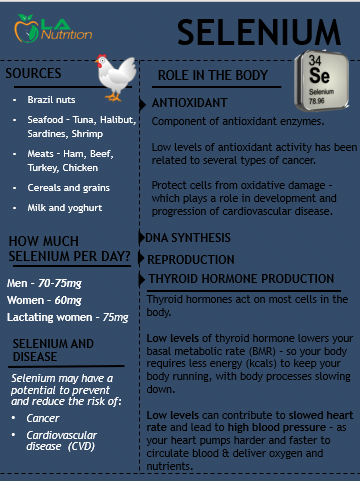
Selenium is an important and essential micronutrient – that plays a role in a number of functions in the body.
Roles
Selenium is involved in:
- Reproduction
- Brain function and thyroid hormone production
- DNA production
- Immunity
- Protection against oxidative damage
Sources
Selenium is found in both animal and plants foods.
Seafood and organ meats (e.g. heart, kidneys, tongue, liver) are the richest source of selenium. Other sources of selenium include:
- Meat – Pork, Beef, Turkey, Chicken, Ham etc.
- Cereals
- Grains
- Dairy products
The amount of selenium in plant-based food varies – and is dependent on the amount of selenium in the soil.
How much Selenium do I need?
- Males and Females 11-14 years – 45 ug/d
- Females 15 years+ – 60 ug/d
- Males 14-18 years – 70 ug/d
- Males 18 years+ – 75 ug/d
Women who are breastfeeding need more selenium each day (+15 ug/d).
How much selenium is in a serving of ..?
- Brazil nuts, (6-8 nuts) – 544 ug
- Yellowfin tuna, 85g – 92 ug/d
- Halibut, 85g – 47ug/d
- Sardines, canned in oil, 85g – 45ug
- Roasted ham, 85g – 42ug
- Shrimp, 85g – 40ug
- Chicken, 85g – 22ug
- Cottage cheese 1% fat, 1 cup – 20 ug
- Brown rice, cooked, 1 cup – 19 ug
- Boiled egg, 1 large – 15 ug
- Wholemeal bread, 1 slice – 13 ug
- Oatmeal, cooked, 1 cup – 13 ug
- Spinach, 1 cup – 11 ug
- Milk & Yoghurt, low fat, 1 cup – 8 ug
Selenoproteins
Seleniums effect are thought to occur mainly through selenoproteins – a protein that contains selenocysteine (selenium).
Selenoproteins are involved in protecting cells from free radical damage, which is associated with illness and disease – e.g. cancer.
Selenium and Cancer
Our bodies cells generate free radicals but can also degrade them – which is necessary to avoid damage.
However, various factors, circumstances and activities of a cell can make cell’s lose control over the formation and management of free radicals – which leads to an imbalance in the formation of free radicals and the defense provided by the cells – leading to high numbers of free radicals, which cause damage, and can lead to the development and spread of of cancer. Selenium containing enzymes (TrxRs) are thought to have a protective effect on the development of cancer by preventing oxidative damage (harm experienced by cells & tissues due to free radicals).
Studies have shown that those with higher levels of selenium have a lower risk of developing – colorectal, prostate, lung, bladder, skin, esophageal, and gastric cancers.
Selenium supplementation may also help prevent and reduce the spread of cancer to a second site & may also be helpful to reduce the size of the tumour spread.