
Micro nutrients are required in smaller amounts than macronutrients. They include both vitamins and minerals.
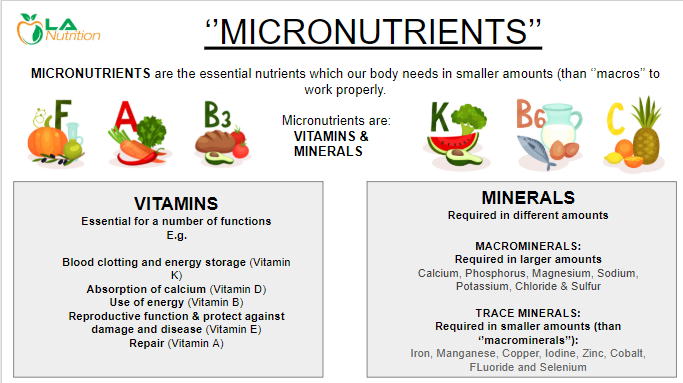
Vitamin functions in the body can include:
- Blood clotting and energy storage (Vitamin K)
- Absorption of calcium (Vitamin D)
- Use of energy (Vitamin B)
- Reproductive function & to protect against damage and disease (Vitamin E)
- Repair (Vitamin A)
Focus on Vitamin C and Iron
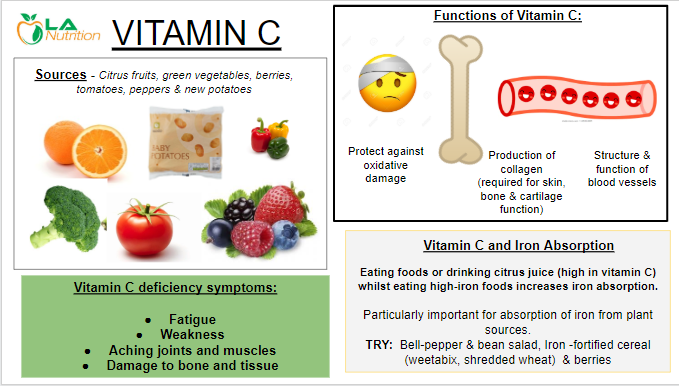
Vitamin C is required for:
- Protection against damage and disease
- The structure & function of blood vessels
- The production of collagen (a protein within skin, bones, tendons, blood vessels and connective tissues)
- Helping with the absorption of iron.
Iron is a trace mineral and is found in both plant and animal sources. Plant sources (including .. nuts and seeds, fortified cereals, green leafy vegetables, tofu, spinach) are absorbed less readily than animal based iron sources (liver, chicken, eggs, fish, poultry etc.) If you only consume plant sources of iron make sure you consume it with a source of vitamin C to increase the absorption of iron into your body.
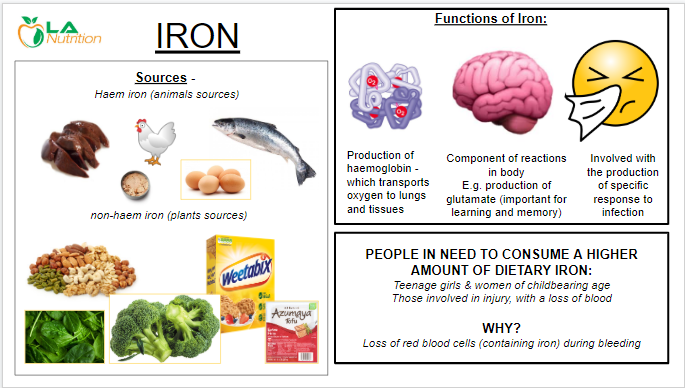
Iron is an important trace mineral (required in smaller amounts than macro minerals) for:
- The production of hemoglobin – which transports oxygen to lungs and tissues.
Women of child bearing age, teenage girls and those who have suffered injury and lost blood, need to ensure they consume a high amount of iron per day. Adult women need 14.8 mg per day as they are at greater risk of losing iron through there red blood cells during menstruation.
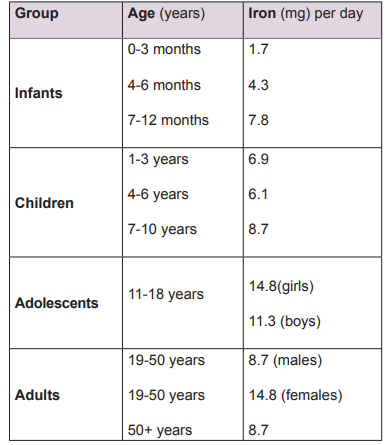
British Dietetic Association
Iron, Vitamin C and Collagen production
Both iron and vitamin C are needed for collagen synthesis.
Collagen is a protein that is a building block for your bones, teeth, muscles, skin, joints, blood vessels and other connective tissues.
Those with high levels of vitamin C (who eat the most fruits and vegetables) are the least likely to have a stroke (a blood vessel blockage leading to tissue death in the brain).