
Plant-based milks are becoming more popular – due to the rise of vegan & plant-based diets, environmental concerns, allergies and lactose intolerance. There are a variety & assortment of plant-based milks – almond, soy, cashew, oat, coconut etc. which you can choice from.
The nutrient content can vary throughout these choices – different amounts of protein, carbohydrate, calcium, vitamin D can be seen in these milks.
Here’s some quick information of the difference of cow’s milk & some plant-based milk.
Cows Milk
The nutrient content of one cup of cow’s milk (about 250ml) is dependent on the type of milk – the amount of fat in each varies, but carbohydrate and protein content is similar .
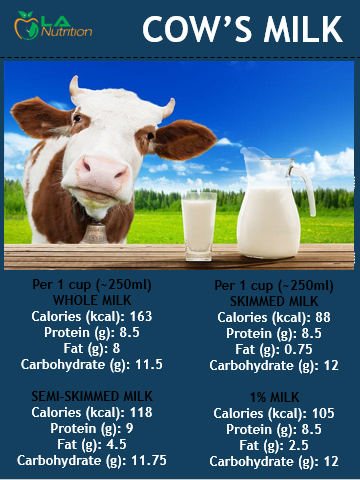
Cow’s milk is also an excellent source of – calcium, vitamin D, potassium, iodine, and vitamin B12. One cup contains about 30% of the daily recommended intake of calcium, 25% of vitamin D, 8% potassium, 57% iodine, and over 100% of our vitamin B12 requirement.
Plant- Based Milks
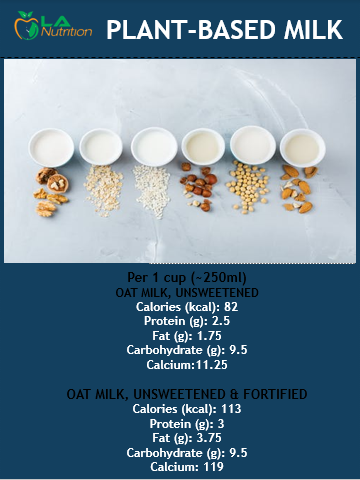
Plant-based milks offer different levels of nutrients, and typically lower in carbohydrate & protein. If you take notice – the unfortified version of the oat milk, contains considerably less calcium than the fortified version.
Prior to fortification – plant-based milks have lower nutritional values of many nutrients, including calcium vitamin B12, and vitamin D. Non-fortified plant-based milks have minimal nutrient value, offering very little nutrients – so you need to opt for fortified versions or have to get these nutrients elsewhere in your diet.
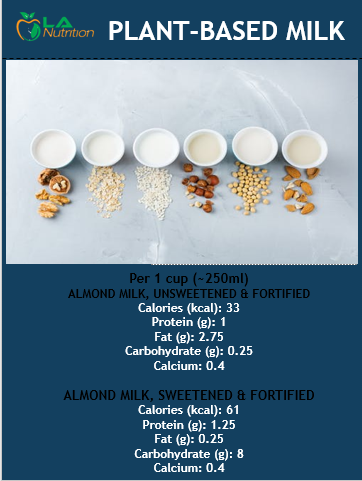
Plant-based milk can also have varying amounts of added sugar – which is something to watch out for. Notice the difference in carbohydrate content between the unsweetened (0.25) and sweetened (8) by checking the label.
What to remember if choosing plant-based milks: opt for unsweetened & fortified versions.