Omega-3
Bupropion, marketed as Wellbutrin, functions primarily as a norepinephrine-dopamine reuptake inhibitor. It exerts minimal serotonergic activity, differentiating it from other antidepressants. After oral administration, peak plasma concentrations are typically reached within three hours. The compound undergoes hepatic metabolism via CYP2B6, forming active metabolites with extended half-lives. Within this pharmacological framework, buy wellbutrin uk represents a therapeutic agent with distinctive dopaminergic and noradrenergic modulation.
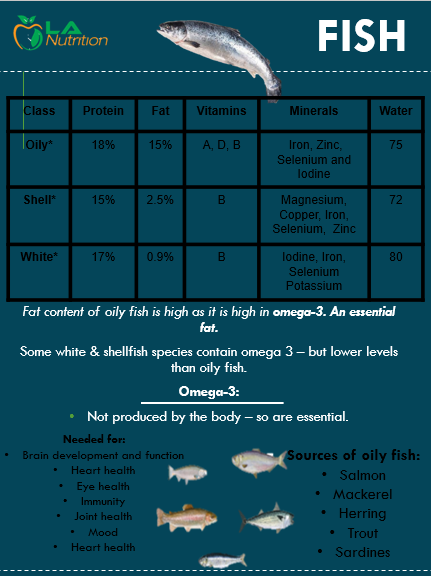
Omega-3’s cannot be made by the body, so this shows us the importance that we include them in our diet!
If you didn’t already know, oily fish contains Omega-3 fats.
Oily fish include: herring, salmon, sardines, trout, mackarel, anchovies. Some white (sea bass, sea bream, halibut) & shellfish species contain omega-3 but at lower levels than oily fish – which is why the fat contents of oily fish are higher than that found in white and shell fish.
Fresh tuna is also a good source of omega-3, not so much omega-3 is found in the canned!
We should be eating 2 portions of fish per week, one of which should be oily. There is no recommendation to the amount of omega-3 we should have per week but we should be eating 2 portions of fish per week, one of which should be oily.
Intake of omega-3 is critical for the development and function of the brain – and helps with learning & memory, our immune function and can reduce and lower the risk of heart disease and cardiovascular problems. People with diet’s rich in omega-3 have been shown to have a lower risk of heart disease than people with diet’s low in omega-3.
People on plant-based diets can get omega-3 in their diet by eating – beans; nuts and seeds e.g. walnuts, pumpkin, chia, hemp and flax; green leafy vegetables; and some foods have omega-3 added to them (some brands of milk, yoghurt, breads etc.).
It is best to get omega-3 from foods, but supplements can be taken – fish liver oil, and omega-3 oil.